
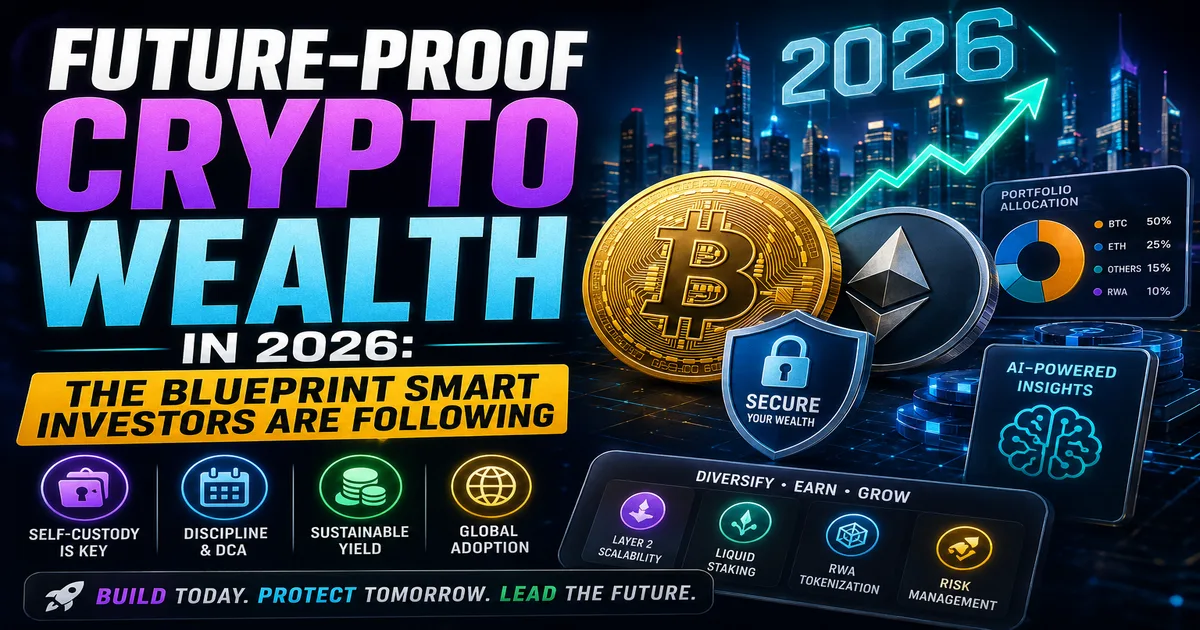
Future-Proof Crypto Wealth in 2026: The Blueprint Smart Investors Are Following
As we approach 2026, the cryptocurrency landscape has shifted from a speculative 'Wild West' into a sophisticated pillar of global finance. For the smart investor, the goal is no longer just catching the next 'moonshot' but building sustainable, future-proof wealth. With the maturation of the 2024 Bitcoin halving cycle and the integration of institutional-grade infrastructure, 2026 represents a pivotal era where the divide between retail gamblers and strategic wealth builders is wider than ever.
The New Paradigm: Why 2026 is Different
In previous cycles, crypto was largely driven by retail hype and narrative-based pumps. By 2026, the market is defined by utility, regulatory clarity, and institutional liquidity. Major financial hubs from London and Dubai to Singapore and New York have established frameworks that allow traditional capital to flow seamlessly into digital assets. To future-proof your wealth, you must move beyond simple 'HODLing' and adopt a multi-dimensional strategy that accounts for yield, taxes, and cross-chain interoperability.
Level 1: The Beginner’s Foundation (Security and Discipline)
Even in 2026, the most common way investors lose wealth is through poor security and emotional trading. Before exploring complex DeFi protocols, every investor must master the basics.
- Self-Custody is Non-Negotiable: While ETFs (Exchange Traded Funds) provide easy exposure for many in the US and Europe, true wealth preservation requires hardware wallets. Use multi-signature setups for significant holdings to prevent single points of failure.
- Dollar-Cost Averaging (DCA) 2.0: Smart investors use automated DCA tools to buy during periods of low volatility. Whether you are investing in USD, EUR, or JPY, consistent accumulation remains the most effective way to mitigate the impact of short-term price swings.
- Focus on 'Blue Chips': In 2026, Bitcoin (BTC) and Ethereum (ETH) are viewed as digital gold and the global settlement layer, respectively. A future-proof portfolio should have at least 50-60% of its value in these proven assets.
Level 2: Intermediate Strategies (Yield and Ecosystem Participation)
Once your foundation is set, the next step is to make your assets work for you. In 2026, 'passive income' in crypto has moved beyond high-risk yield farming to more sustainable models.
The Rise of Layer 2s and Modular Blockchains
Transaction fees on Ethereum mainnet can still be prohibitive. Smart investors have migrated their active capital to Layer 2 (L2) solutions like Arbitrum, Optimism, and Base. These networks offer the security of Ethereum with a fraction of the cost, making them ideal for decentralized finance (DeFi) activities.
Liquid Staking and Restaking
The 'Proof of Stake' era is in full swing. By using Liquid Staking Tokens (LSTs), you can earn staking rewards (typically 3-5% annually) while still keeping your capital liquid to use in other DeFi protocols. Furthermore, 'Restaking' through platforms like EigenLayer allows you to secure additional services and earn extra yield, though this comes with increased smart contract risk.
Level 3: Advanced Blueprint (Institutional-Grade Tactics)
To truly future-proof wealth in 2026, one must look at what the 'smart money' is doing. This involves moving into Real World Assets (RWA) and sophisticated risk management.
Tokenization of Real World Assets (RWA)
One of the biggest trends in 2026 is the on-chain representation of traditional assets. You can now hold tokenized versions of US Treasury bonds, gold, or even fractionalized real estate in London or Tokyo directly in your crypto wallet. This allows for a truly diversified portfolio that bridges the gap between digital and physical wealth.
Navigating Global Regulations (MiCA and Beyond)
Regulatory compliance is no longer optional. In the European Union, the Markets in Crypto-Assets (MiCA) regulation has brought a new level of consumer protection and reporting requirements. In the US, the SEC and CFTC have provided clearer guidelines for digital assets.
Actionable Tip: Use professional crypto tax software (like Koinly or CoinLedger) that supports your specific jurisdiction’s tax laws. In 2026, tax authorities have sophisticated on-chain tracking tools; transparency is your best defense against audits.
The Role of AI in Crypto Wealth Management
By 2026, Artificial Intelligence has become the ultimate tool for the crypto investor. AI-driven analytics can now predict liquidity crunches, identify undervalued NFT collections, and even execute automated rebalancing of your portfolio based on your risk tolerance. However, avoid 'black box' AI bots that promise historical returns; instead, use AI for data synthesis and sentiment analysis to inform your own decisions.
Risk Management: Protecting the Downside
The volatility of crypto has not disappeared; it has simply become more structured. To protect your wealth:
- The 10% Rule: Never allocate more than 10% of your total net worth to high-risk 'altcoins' or experimental protocols.
- Stablecoin Diversification: Don't keep all your liquid cash in a single stablecoin. Spread your holdings across USDC, USDT, and regulated, euro-backed stablecoins to hedge against de-pegging risks.
- Exit Strategies: Have a pre-defined plan to take profits. In 2026, smart investors use 'trailing stop-losses' to capture upside while protecting their initial capital.
Conclusion: The Long-Term Vision
Future-proofing your crypto wealth in 2026 requires a shift in mindset. It is no longer about checking prices every hour; it is about building a robust, regulated, and diversified digital estate. By combining the security of self-custody, the yield of liquid staking, the stability of RWAs, and the efficiency of Layer 2 networks, you can navigate the complexities of the modern financial world. The blueprint is clear: stay informed, stay compliant, and stay disciplined. The future of finance is digital, and those who prepare today will be the leaders of tomorrow's global economy.
Comments
No comments yet. Be the first to share your thoughts!
Leave a Comment